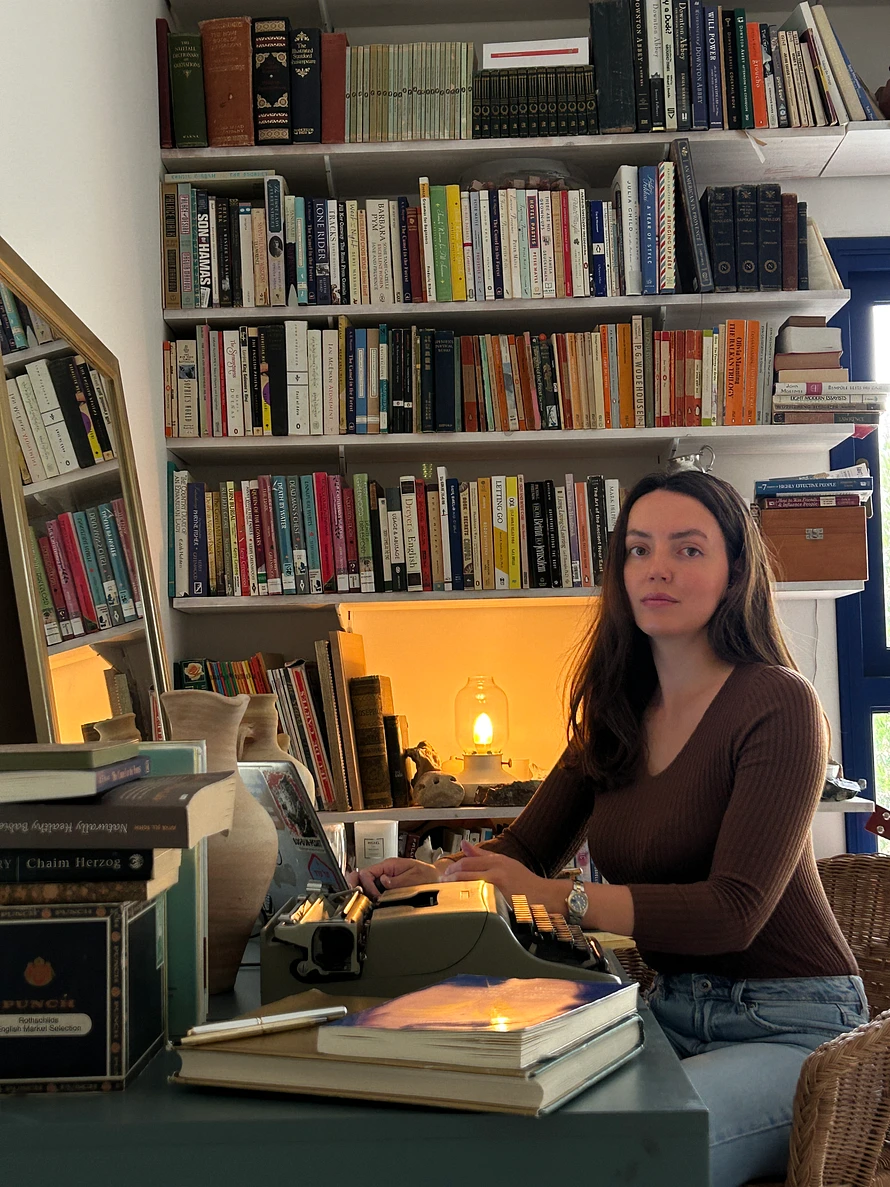
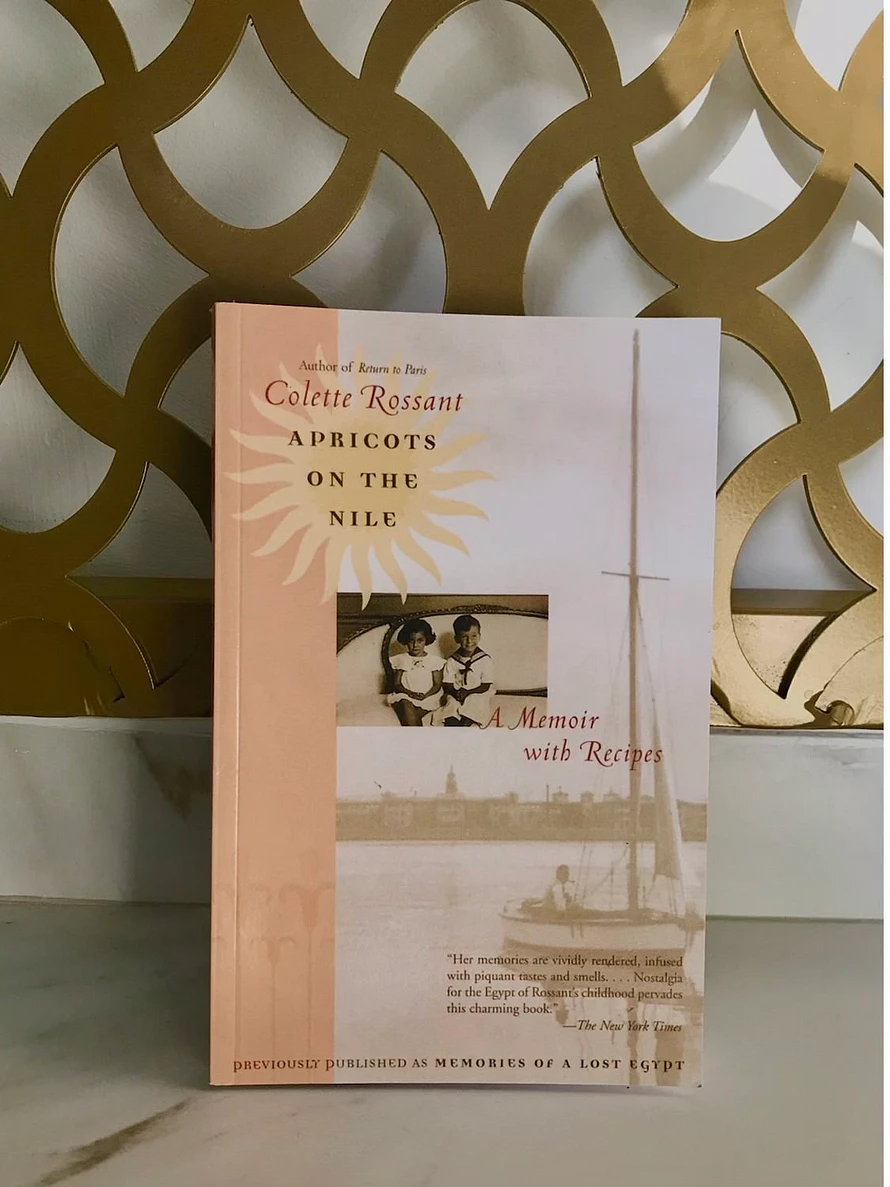
I starting writing this review nine months ago when I originally finished reading Where mountains Roar by Lesley Hazleton. Started before Purim and finished before Pesach, reading about Lesley Hazleton's experience exploring the Negev and Sinai deserts was very moving but not necessarily in a sentimental way. As amazing as her explorations were, her account of her experiences in 1970's Israel left me feeling jealous, defensive, and a bit irritated. I may not have been alive or in Israel in the 1970's but I have read and know of enough historically accurate sources to refute a large portion of Hazleton's sentiments towards Israel and it's people.
I suppose I started this review off in the negative, so for balance I will preface the rest of the review with what I did enjoy about her account. Reading about Hazleton's first-hand experience seeing and absorbing the purity, beauty, and majestic of the Negev and Sinai deserts was very exciting, and one of the reasons I felt such strong jealously of her experiences. For the most part, the natural areas of Israel in the 1970's, especially the Negev were still largely untouched and to be able to have a local guide take you from mountain peak to biblical mountain peak is an experience that would not be the same now as it was then. Though it was tedious in several areas, I enjoyed her in depth study of various flora and fauna that are native to the Negev desert and further more how important they are to maintain an equilibrium of biodiversity in the Negev desert. Her work as a conservationist is commendable and overall I support her idea that it is our duty to preserve the nature of natural places, especially deserts which are places often overlooked in conservation (most of the time, the ice flows and jungles are the most discussed in terms of conservation).
That really should be the short book review and the end of it, but the review I started writing at the beginning of this year really more accurately reflects how this book made me feel and the points I felt necessary to argue with Hazleton as an Israeli living in the Negev desert, not as a conservationist visiting for a period of time with no real buy-in to the land of Israel and the Negev desert. I wrote the review in form of an open letter to Hazleton.
Dear Ms. Hazleton,
I finished reading your report on the Sinai and Negev desert. I must say it has been some time since I have been so conflicted by a book, not merely in how it should be rated or whether it should be kept as part of my library, but more how do I even begin to address the spectrum of inciting and important topics you addressed in your short report? First it's important to say that because this is, as stated on the cover, a personal report, much like a memoir, I cannot contradict or argue with a fact or an experience that is solely yours to experience and recount, but I will address the less factual parts of your report.
I really enjoyed reading about your experience on Mount Sinai and learning the different peaks there each called by a different name in each language that reveres these mountains as a place where G-d came to speak to man, and spoke to Moshe Rabeinu (Moses). I cannot deny that I felt a strong prickle of jealous at your experience in the Negev and Sinai of the 1970’s because the world was different in so many ways than it is today, in many ways for the better. Probably the greatest advantage is the state of purity nature still remained in, at least before the decimation of natural places by the overuse and improper disposal of plastics. The 1970's knew little of the havoc plastic would wreak across the world and the face of nature decades later. Unfortunately, some areas of the Negev desert of 2021 are the most plastic polluted places in Israel.
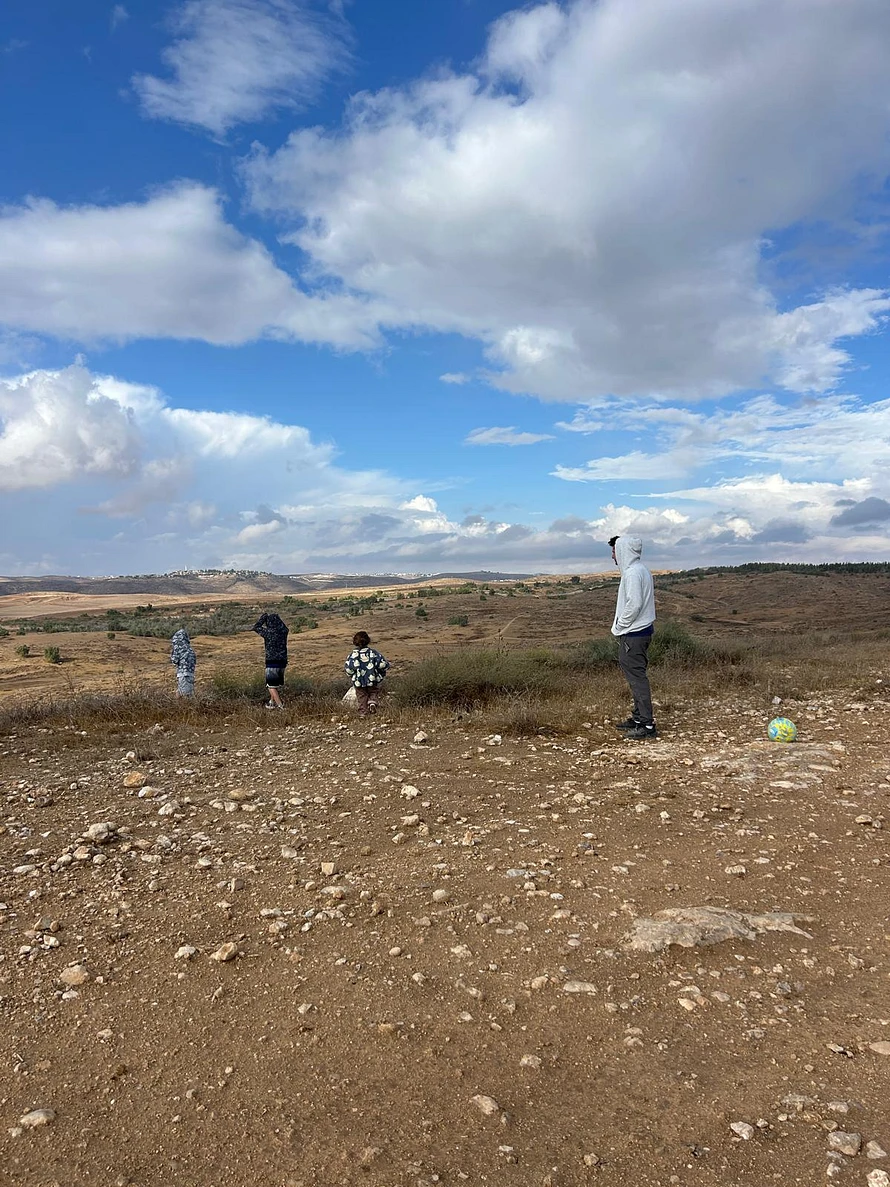
I finished your report the morning of the first day of chol hamoed (intermediate days of Passover) and in the same moment I felt compelled to go deep into the Negev and bring back my own report of its current condition and wonder. Addressing first-hand many of the concerns you raised in your book of the future of the Negev in the hands of the Israelis and out of the hands of the once free-roaming Bedouin tribes. At my insistence, my husband and I loaded our sons into the car and drove West towards Egypt to find the entrance to Road 10. Road 10 runs parallel to the 1967 boundary line of the Sinai Peninsula, as I am sure you are well-familiar. As of 2012 this highway is closed to civilian travel throughout the year because of multiple terrorist attacks by ISIS from Egypt on Israeli civilians driving on Road 10. Road 10 is only open during the Jewish holidays of Passover and Shavuot for scenic driving and enables Israelis to visit local natural springs and unique mountain formations.
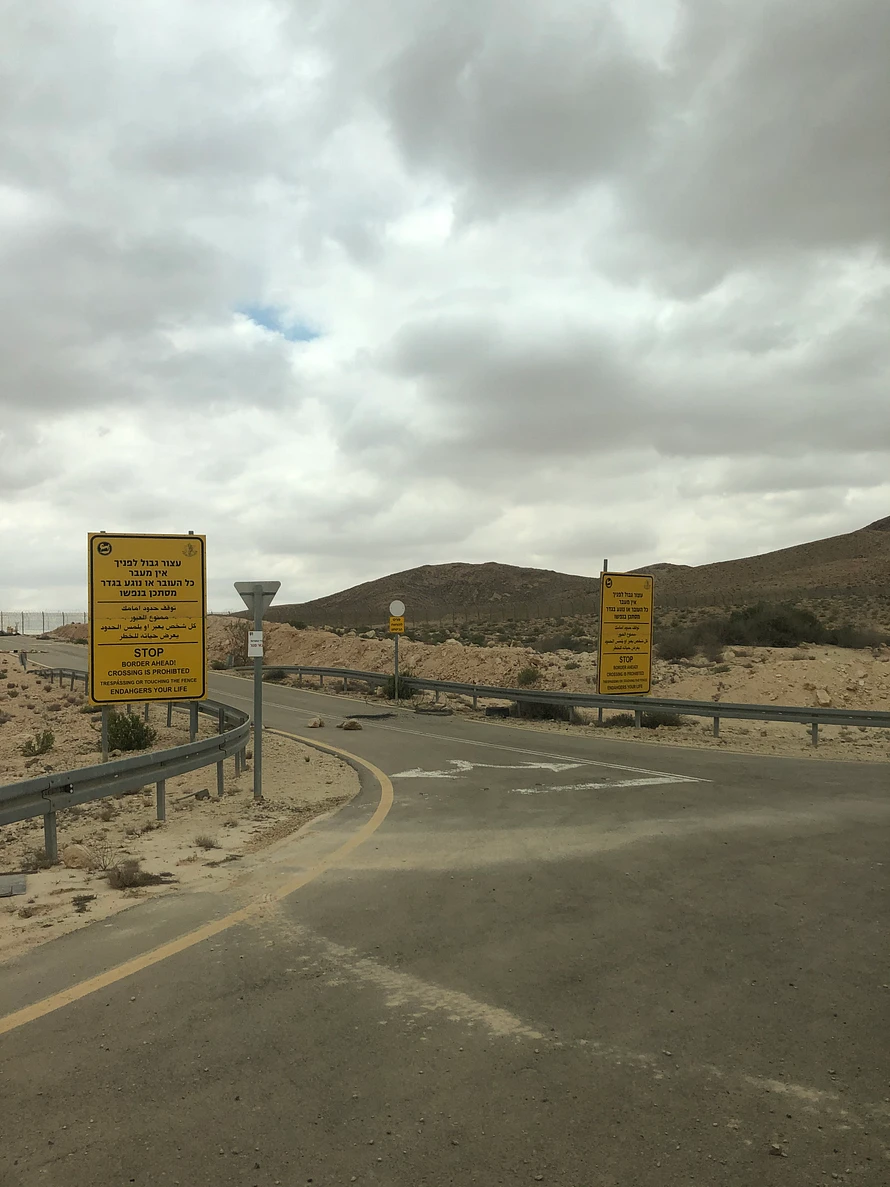
Guarded Entrance to Road 10
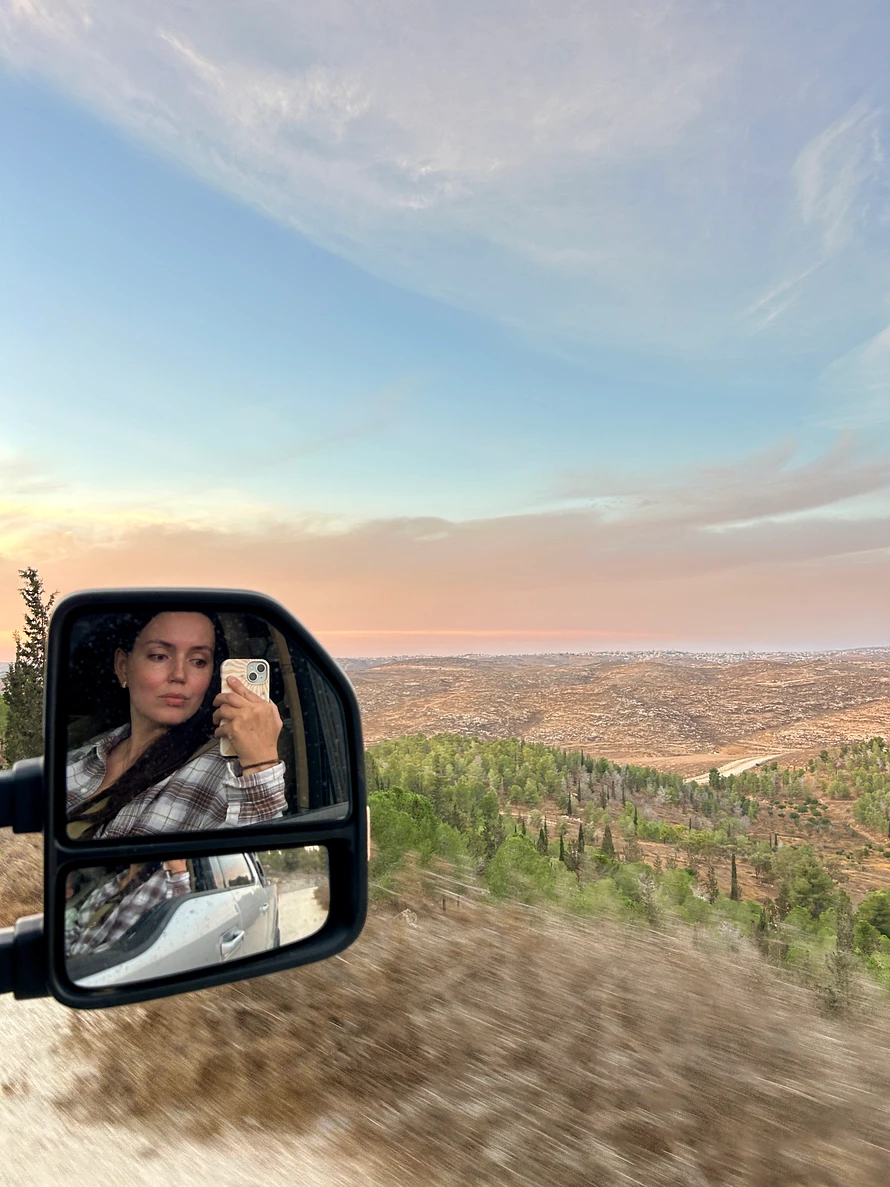
Leaving our home in the Northern Negev, there was perfect “mezeg avir shel pesach” ("Passover weathe", a saying used in Israel to describe the usually perfect annual spring weather during the holiday of Passover) blowing through the Negev. Leaving my home situated south of the ancient city of Susya, skirting the Yatir and Meitar forests, we took the less-traveled highway 211 to get to Road 10.
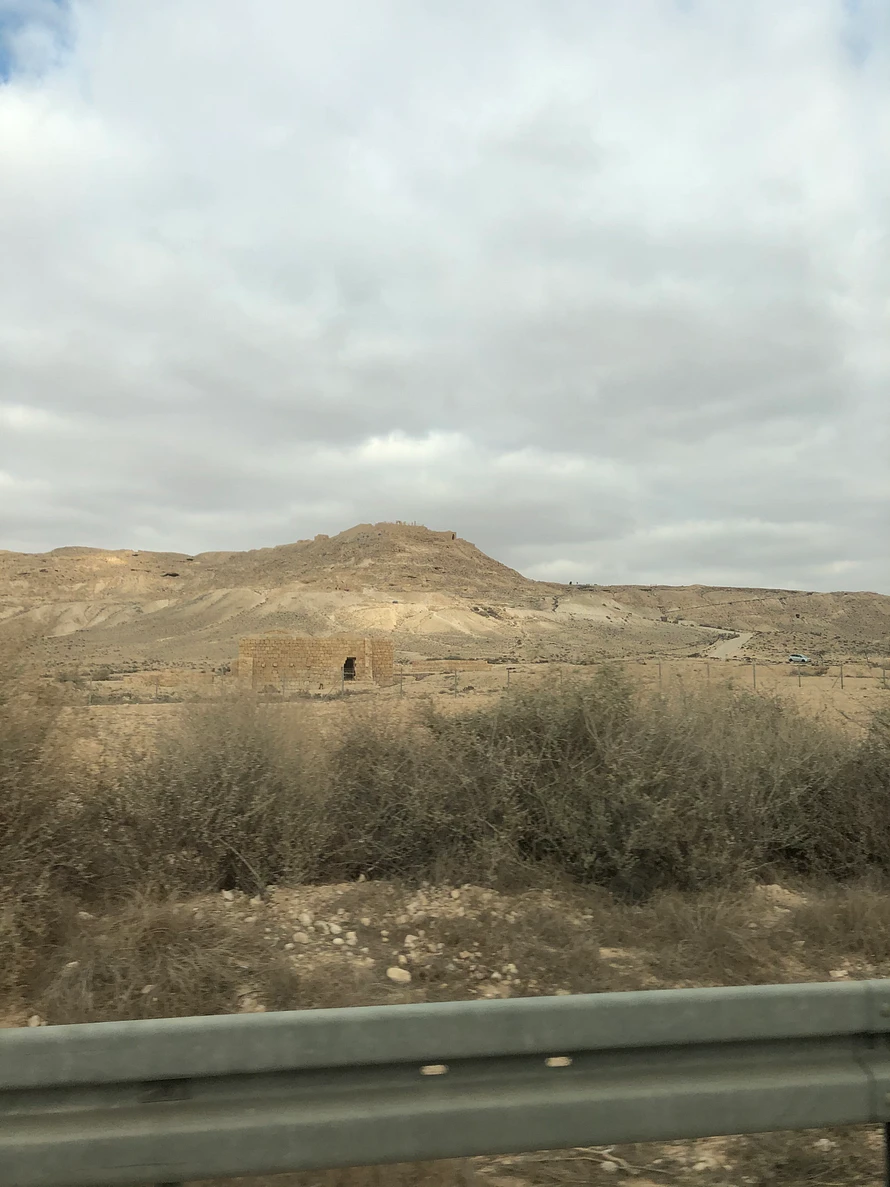
Nabatean Ruins Aside Road 10
Before we arrive at Road 10, I should start my own report by educating you about the numerous Bedouin camps and towns that line the sides of every highway in the Negev. These camps and towns would not have existed during your visit. Abutting my own yishuv is one of the largest Bedouin towns in the Negev called Hura which faces across the highway another large Bedouin town called Lakiyya. As you drive along the highway in any direction in the Negev you will see the many tribal Bedouin camps that cover both sides of the highway for kilometers in all directions. Though you may not be familiar with these camps you may have know some of these Bedouin tribes as they have been wandering the deserts of Jordan, Israel, and Egypt for generations. Some of the larger tribes in the area are: Al Sayid, Abu Masa’ed, Abu Kaf, and Abu S’beit.
These lands they camp on are not the “reservations” you mentioned in your report, those "reservations" you mentioned were temporary relocation points for many Bedouin that chose to stay roaming the Negev desert afterwards the War of Independence when Israel became an independent country. The so called "reservations" you mentioned were the same kind that my Israeli father- in-law was born in after his Jewish parents fled the Nazi's in Tripoli and were given no other option by the newly formed Israeli government but to live in tents in a camp until proper housing could be allocated to them. This plan was across the board for all new immigrants or unestablished peoples living in newly formed Israel; not a racist plan to eradicate the Bedouin or erase their traditional ways as you stated in your report. I should note here that all Arabs and Bedouin in Israel at the time of the War of Independence were given the choice to stay and acclimate to the new country of Israel or leave to Jordan or the Sinai were they were still allowed unfettered entry. The Bedouin of Israel in the 1970's and of today are the descendants of Bedouin who chose to stay. In my opinion, no matter who you are or what your culture is, if you choose to make a new life in a new country you will have to compromise some of your previously known way of life, just as both sides of my in-laws family had to when they immigrated to Israel, even if this culture is a nomadic one. It was a choice.
The Bedouin have long-since moved out of these reservations and spread throughout the Negev choosing their homes and settling their tribal families willy-nilly (for lack of a more sophisticated description of the balagan in these areas) on valuable land, living and building however they wish, without paying any arnona (state land tax) that all other Israelis must pay whether they rent or own. Very often these lands they camp on are some of the most beautiful areas in the Negev.
It is important to clarify, before I continue listing any more established or accidental benefits the Bedouin enjoy in Israel, that all Bedouin in Israel have Israeli citizenship, a national ID card, as well as right to an Israeli passport. This gives them rights to free healthcare, a right to vote, and access to all the same national benefits me and my family have as Israeli citizens. Additionally, because the Bedouin are an ethnic minority in Israel they are not obligated for compulsory military service like all other Israelis (excluding a few other small ethnic or religious minorities), they have an additional social security benefit that most Israelis do not received which is a large monetary sum paid to the father for every child born as well as a monthly stipend for each of those children. The Bedouin are given first admission priority in Israel universities and colleges, priority above native born Jewish Israeli applications, many Israel friends of mine have had to live in Europe for several years to study in English in European universities instead of in Hebrew in their home country. There are countless NGOs that that offer employment, social, financial, and community services to Bedouins in Israel, yet male Bedouin unemployment rate has been between 30-50% for decades.
From personal observation, I don't find this percentage to be very accurate because many if not a great majority of Bedouin men (and some Bedouin women) work and make a living in jobs or areas of work that are not registered as a business or registered for tax purposes and some which are completely illegal including smuggling drugs across the borders with Jordan and Egypt and farming marijuana hidden in large green houses in the desert. All of these financial "breaks" and benefits add up to a lot in Israel because Israel is one of the most expensive countries in the world and many Israelis find it difficult to maintain a lifestyle they could more easily attain in a country like the United States. The average Bedouin person has the ability and resources to succeed and drastically improve their quality of life, if they so choose.
It is never easy for a minorities to succeed without external help and benefits, which the Bedouin do receive, nor is it easy or even desirous for said minority to change their traditional ways and adapt to "modern" society, but every culture has had to adapt to some extent and it is very possible to adapt and advance while retaining your culture heritage and traditions. We see evidence of this in other modern Arab cultures like Saudi Arabia, Bahrain, and the UAE.
I mention all of these benefits and rights the Bedouin citizens in Israel have because in your report you felt that the Negev would have been better left in the care of the Bedouin and that the Israeli government abuses the Bedouin people and their "right" to land in the Negev desert. Even with all these rights and benefits, the Bedouin in the Negev for those most part choose to live in squalor. Those living in established Bedouin towns that have electrical, water, and refuse services still burn their trash next to the city dumpsters instead of clearing it off the ground and placing it in the dumpsters to be taken to a landfill. Those who choose to camp in the Negev far from any towns, Bedouin or Jewish, discard their sewage waste, plastic waste, totaled cars, agricultural waste, and household waste into heaps outside of ramshackle aluminum sheds and building used as homes and residences. These heaps of trash grow wider and taller every day, filling the Earth with toxic, chemical, and nondegradable waste. This waste is picked up by sand storms and seasonal torrential rains and is swept away, down into the Dead Sea at the lowest point on Earth or deep into the mountains that you heard roar. It is absolutely the responsibility of the Israeli government to be enforcing sanitation and dumping laws throughout Israel, but the Bedouin will have to learn to adapt if they want to preserve their ways and the land they live on. Most of them have the resources to live better but they choose instead to let their livestock and children wander through trash heaps, often barefoot, with no regard to their health or safety. This is the culture that you believed would preserve the beauty and purity of the Negev.
I have repeated the word majority in this letter in reference to these facts about the Bedouin to emphasize that there is a minority within the Bedouin minority who do care about the Negev desert, nature, and conservation and I so wish that number will only grow larger from generation to generation. There is also a percentage of Bedouin who have taken advantage of the benefits and resources available to them and have gone on to become doctors, lawyers, researchers, artists, and teachers, and in doing so have left their communities and traditional ways because there is no room in their traditional culture for modernization or change. But the majority choose the traditional Bedouin life.
And I should clarify that it is the Bedouin men who choose to live as they do, because even in 2021 the Bedouin women have no agency in their own family's decision-making. In fact those stimulus payments for each child born are paid to the father of each child no matter how many wives he has married nor how many children each wife bears him. This money is usually kept by him and distributed to the wives and family at his discretion. This traditional, patriarchal way of handling money can be best seen in Bedouin camps throughout the Negev where you will see poorly built aluminum shacks and tents in the middle of the desert with a Land Cruiser, BMW, or Mercedes (for mobility the Land Cruise or Land Rover are the most popular options among the Bedouin) parked outside one of the tents.
Most surprising to me, Ms. Hazleton, was not so much what you did report on, but rather what you didn't report on. I found it remarkable that in your report, as a modern British woman reporting on traditional Bedouin life in the Negev, you didn’t make any remarks about Bedouin women except to mention that they are forbidden to ride on camels and thus Bedouin men were often very surprised to see you riding on one. I suppose that by being made an honorary male on several occasions so you could sit in the male-only guest tent as a guest with other Israeli males, you didn’t wish to notice or mention the plight of the Bedouin woman in the life of the roving, romanticized Bedouin man you spent most of your report on.
But don’t worry, the Bedouin women of the 1970's (and many in 2021) do not really even understand their lack of rights, essential needs, and empathy from others. They are born and raised to be one of many wives to a man who provides her a shack, enough money for groceries, and conjugal visits as often as he feels (or doesn’t feel). And if she’s lucky, he will actually favor her above the other wife/wives and choose to live with her and her children so that she can care for him daily.
In all the Bedouin camps and tents you visited, there wasn't one woman you spoke to or asked about her life or offered her an opportunity to share her life and be remembered in your report? That seems a little ironic considering you were progressive woman in a man's world pursuing your interests at a time when white women's rights were not even close to what they are now, much less women of color. The smallest mention of your fellow woman wouldn't have gone amiss in your personal report, leaving them out only shows where your priorities don't lie.
At this point, I digress and will return to telling you about how I found the Negev alive and well despite the previous issues mentioned and despite your belief that the Israeli government would ruin the Negev.
Continuing on our way to Road 10, past Sde Boker, past the Ashalim solar tower that looks like something out of a futuristic LOTR, and finally arriving at Nitzana where there is a small military junction blockade surrounded by 18-year-old male and female Israeli soldiers. A young female solider took our information and explained that all vehicles entering Road 10 must leave by 4pm when the mysterious Road 10 when be closed to the public again. Road Ten runs parallel South 182 kilometers with the border of Egypt where, on the Egyptian side, there is a similar rural road. Given a map by the young female soldier who checked our IDs and logged our license plate, we start driving on the one-way road, keeping an eye out for notable works of nature on our left as we drive south.
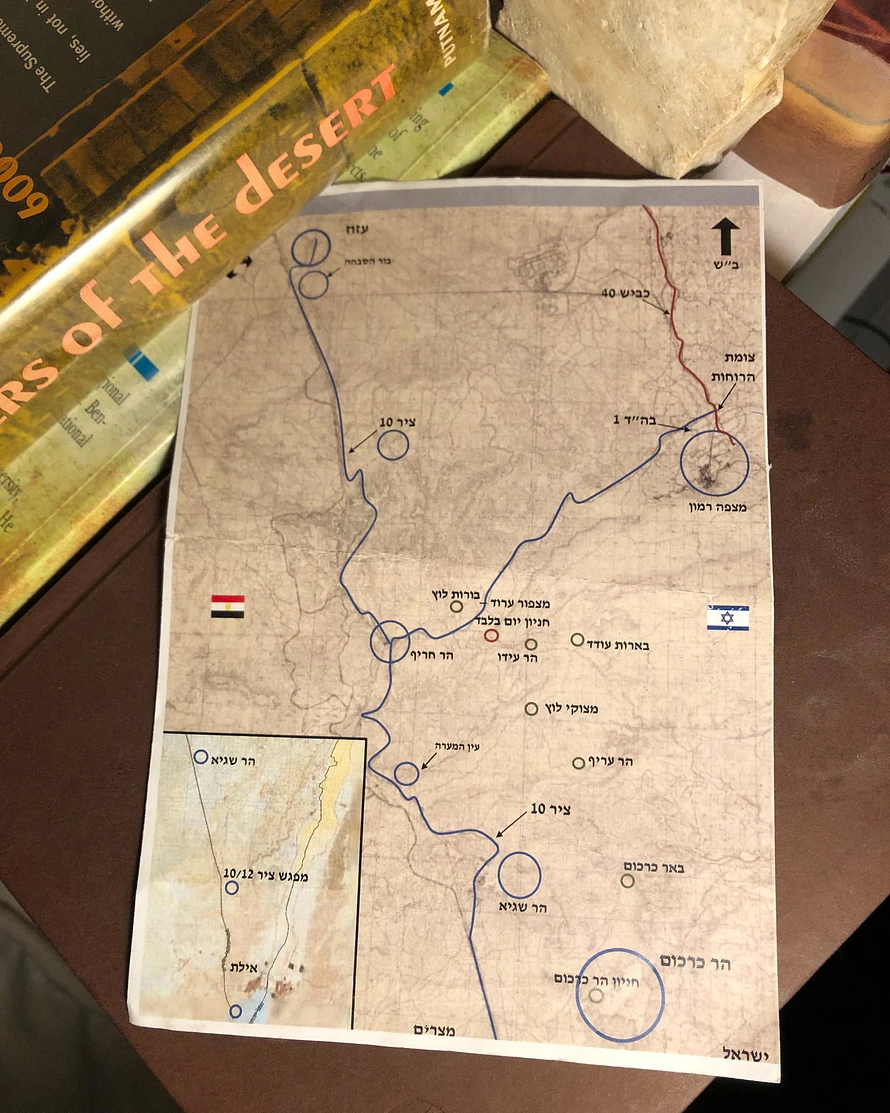
Map of Area Surrounding Road 10
With hidden underground springs, rare cuts of iron ore cliff jutting out of dunes, and high flat plains of dune extended out from the East of the road, the drive is a stunning reminder of the bare majesty of the Negev desert. Though it is almost impossible to not notice the amount of Egyptian outposts on the other side of the border on my right as we drive South. Built of waist-high stone walls, the outposts boast nothing more than a few gun ports in the stonework and slanted tin roofs for shelter against the blazing desert sun, the gun ports hold an automatic machine gun pointed at both the Israeli border as well as towards the Egyptian interior, presumably to be used in the case of an attack by ISIS from within Egypt. These small outposts run along the border every kilometer or so and are manned by a single soldier who looked very bored, and from what I saw, kept himself entertained by doing stretches or sitting on the aluminum roof to better glimpse the caravan of passing Israelis on holiday.
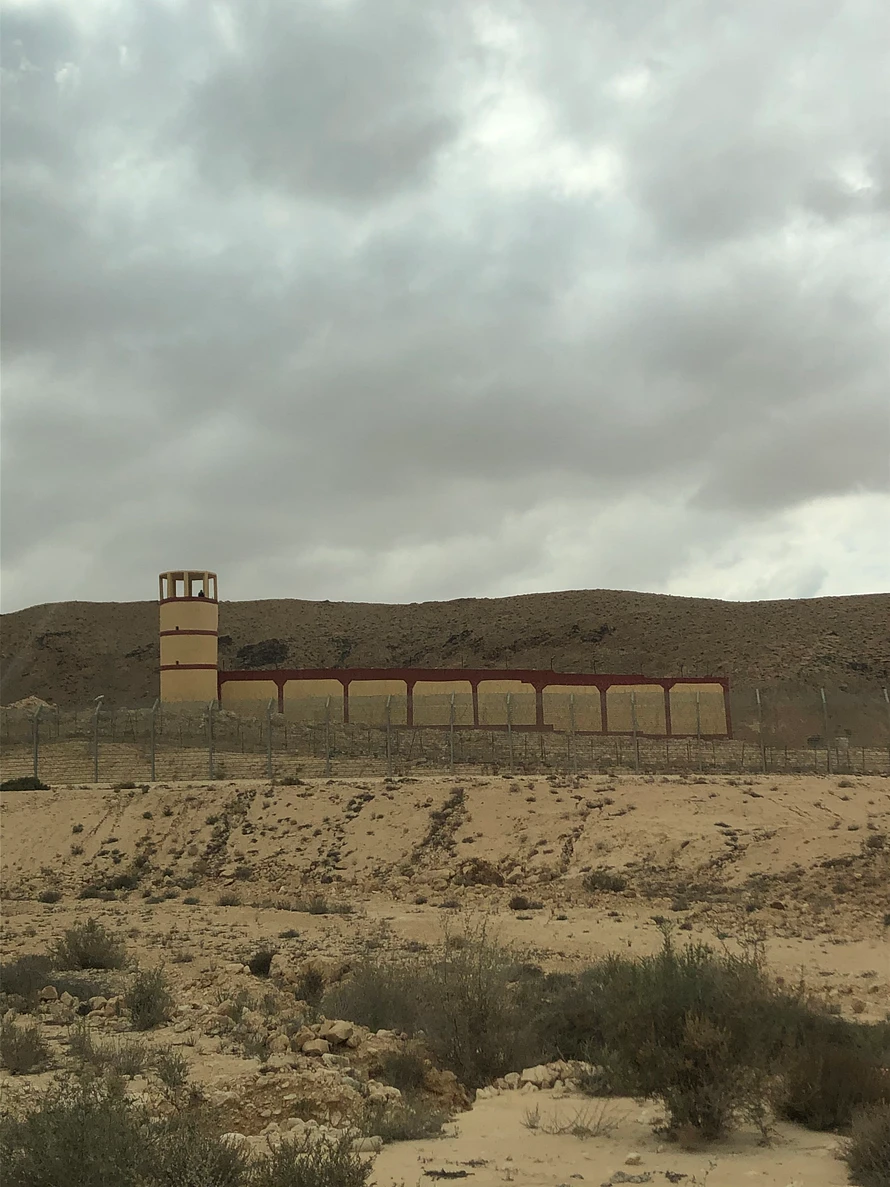
Large Egyptian Military Base
As the topography of the Negev rose and fell, at the high points I could look into the Sinai desert of my forefathers, the same Sinai desert Moshe crossed carry the bones (Shemot 13:19) of his forefather Yakob onwards through the northern Negev and up into Hevron, close to my home, to be buried with his wife Leah and his forefathers in the Me'arat Machpelah (The Cave of the Patriarchs). That same desert stretched out before my eyes as empty and beautifully desolate as the Sinai you saw in the 1970s.
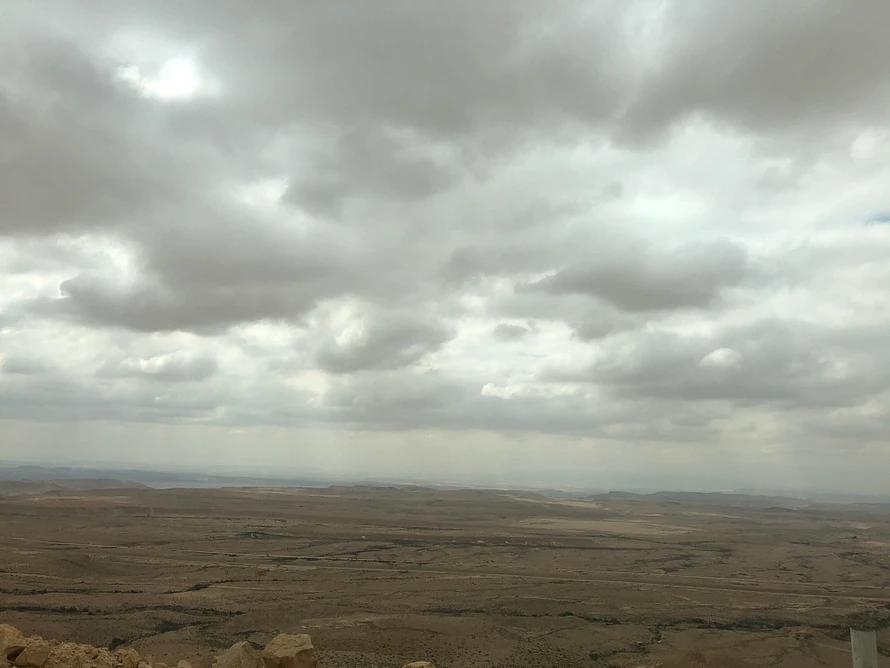
View of Egyptian Sinai
We stopped at an underground spring to see the area and climb some of the lower mountainous hills in the area, and then continued the beautiful drive South on Road 10 until we met the crossroad for Mitzpe Ramon, which we took all the way back North towards lunch and home. It was an unforgettable drive and an unforgettable experience in the Negev.
To end, in your prologue you tried to convey that your love of the desert is not like the other British explorers and archaeologists who came here before you. You stated that their love was possessive, they wanted to possess the desert, make it their own, colonize it, and that your love for the desert is one of a conservationist, to conserve the desert's nature and its culture.
Unfortunately, after reading your report and knowing the Negev as I do, I do believe in your love of the desert but I do not believe your love is free of agenda or bias. You spoke as if your love for the Negev is the truest and rightest love of all, but I don't think you can ever understand the love, gratitude, and appreciation a 6,000 year old exiled people can have for returning to live in their ancestral desert. And within the State of Israel as I know it now, there is room enough for all of the desert's inhabitants to find their place and make a home in the Negev.
So, you do not need to mourn the death of a desert as you said in the closing of your book. The Negev desert is alive and flourishing as I had hoped I would find it. But from one conservationist to another, I can agree with you that means to enforce better treatment of the desert and its flora and fauna must be instituted to ensure this beautiful land last for generations to come.
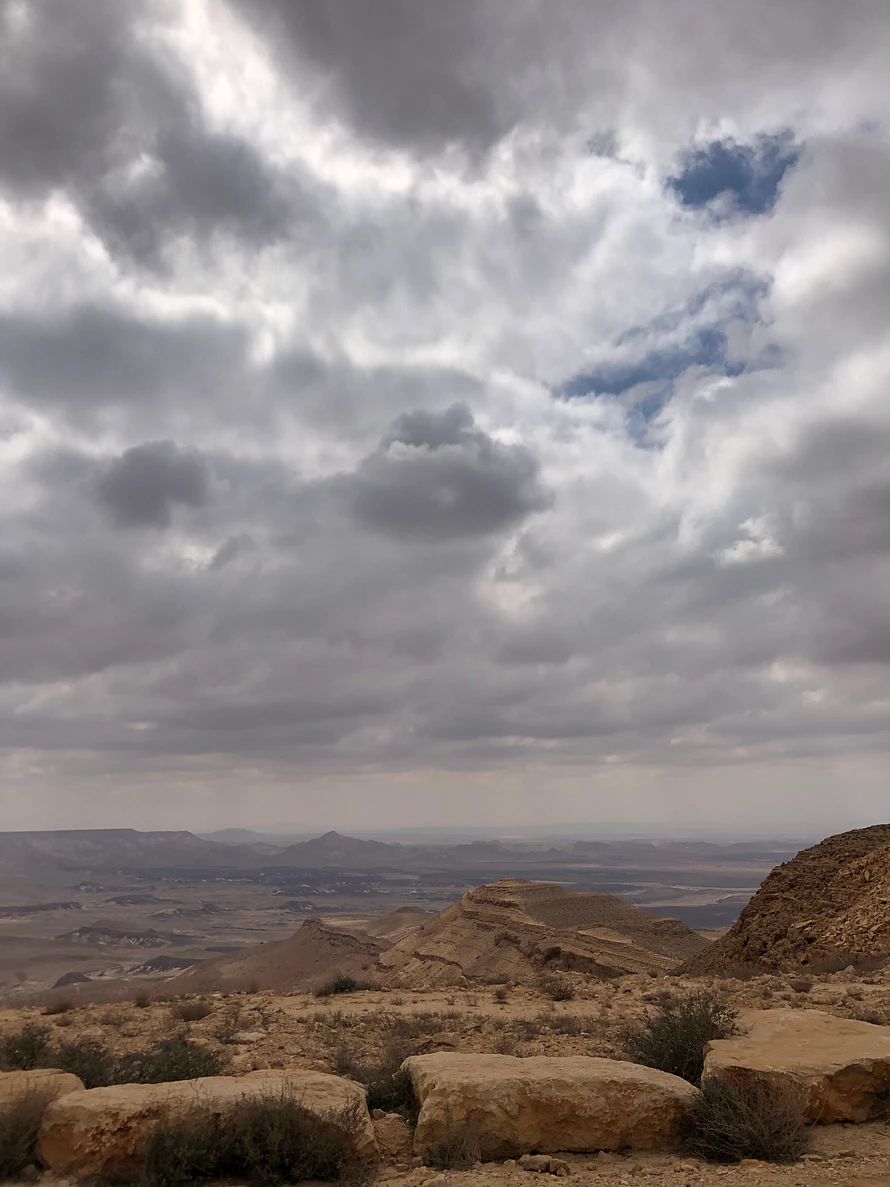
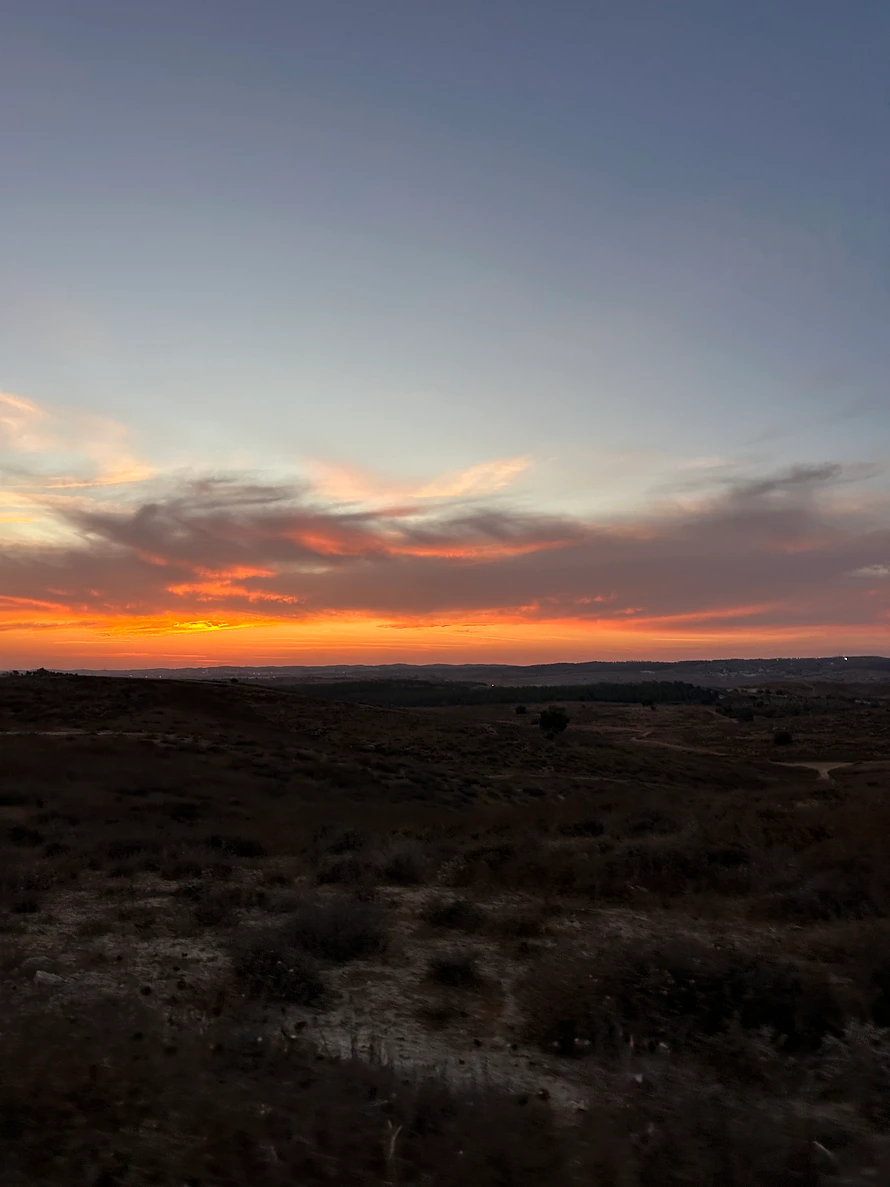
View of Road 10 looking Northward from junction 171
Four stars for the intrigue and provocative nature of this read.
Until the next review,
Avigail